
Celebrating Women in Science Day: Inspiring the Next Generation of Female Innovators in East Africa
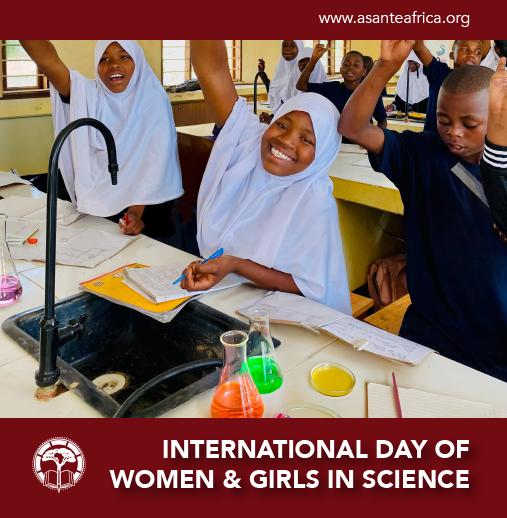 On International Day of Women and Girls in Science, we recognize the brilliance, resilience, and contributions of women who are breaking barriers in STEM fields. Across East Africa, young women are stepping into spaces where they have historically been underrepresented—engineering classrooms, research labs, and tech startups—proving that science is not just for the few but for all.
At Asante Africa Foundation, we believe that empowering young women in science is not just about education; it’s about changing narratives. Through mentorship, hands-on learning, and access to resources, we are helping girls turn their curiosity into careers, ensuring that the next generation of female scientists, engineers, and innovators has the tools to lead.
The Challenges and the Urgency for Change
Africa has one of the highest proportions of STEM graduates in the world, with over 30% of university graduates in sub-Saharan Africa specializing in STEM fields (UNESCO). Notably, 47% of STEM graduates in Africa are women, the highest proportion globally. This demonstrates that African women are actively pursuing STEM education at rates higher than many other regions. However, despite this progress, their representation in leadership roles, high-paying STEM careers, and research remains disproportionately low.
The statistics highlight both the strides made and the challenges that remain:
-
-
- While 47% of STEM graduates in Africa are women, they are significantly underrepresented in leadership positions and technical careers, particularly in engineering and technology-related fields.
- In sub-Saharan Africa, only 30% of science and technology researchers are women (UNESCO), limiting the visibility of female role models in scientific innovation and decision-making.
- In fields like engineering, AI, and ICT, women make up less than 20% of graduates in many African nations, despite the rapid growth of these industries (World Bank).
- A gendered digital divide persists: in sub-Saharan Africa, women are 32% less likely than men to have access to mobile internet, limiting their ability to explore online learning opportunities and digital careers (GSMA Mobile Gender Gap Report 2023).
-
While Africa is producing an unprecedented number of female STEM graduates, there is still work to be done to ensure they transition into high-impact careers, leadership roles, and innovative research opportunities. Addressing this requires targeted mentorship, inclusive policies, and access to resources to bridge the gender gap and ensure that women in STEM are not only present but thriving.
 How Asante Africa is Elevating Women in Science
Through our programs, we are working alongside young women to build confidence, provide STEM education, and create opportunities that prepare them for careers in science and technology. By addressing the barriers they face and fostering a supportive environment, we ensure they have the skills and mentorship necessary to succeed.
-
-
- STEM Education Initiatives: Our Accelerated Learning Program integrates digital tools and innovative teaching methods to help girls excel in math and science—fields where they have often been underrepresented. To date, 86% of our 150 schools are supported with digital systems, teacher training, and digital curriculums, significantly improving retention and performance in technical subjects.
-
- Mentorship & Leadership: Through our programs young women are connected with female mentors in areas such as science and technology, aligning their passions with real world experiences and proving that their ambitions are not only valid but achievable. By fostering mentorship networks, we ensure that young girls have access to the guidance and role models necessary for success in STEM.
-
- Youth Livelihood Program: We equip young women with business and entrepreneurship skills, helping them launch STEM-related ventures that address local challenges, from sustainable agriculture to technology-driven solutions. By supporting young women as innovators, we ensure that their contributions to STEM extend beyond education and into economic development.
-
A Future Led by Female Innovators
Women in science are not just shaping the future—they are transforming communities today. From young innovators designing sustainable agricultural solutions to aspiring engineers developing life-changing technologies, their contributions are vital to East Africa’s development.
On this International Day of Women in Science, we celebrate not only the women leading in STEM today but also the girls who, with the right support, will become the trailblazers of tomorrow. By investing in their education and ensuring they have access to mentorship and resources, we are not just closing the gender gap—we are building a world where science benefits from the full potential of all its brightest minds.
As we look to the future, we remain committed to expanding access, amplifying voices, and ensuring every girl with a passion for science has the opportunity to pursue it. Together, we are building a future where young women in East Africa are not just participants in science but leaders in shaping its future.
WRITTEN BY: Chioma Okoro
