International Women’s Day: Veneration in a Fight Not Finished
 Breaking Barriers Worldwide
In Canada, a CEO delivers a 5 year anniversary speech to her employees. In Bolivia, a lawmaker prepares her notes for the assembly room proceedings. In Tibet, a theologian advises her pupil on finding spiritual transcendence. In Australia, a panelist provides her expert input on natural hazards. In Poland, a data engineer demonstrates her latest results at an AI expo. In Antarctica, a station manager trains her new recruits on how to process the lab samples (and toughen up for the weather). In Tanzania, a graduate student submits her research which will enhance an academic body of knowledge.
International Women’s Day 2026 is on March 8th. It is an opportunity to recognize, support, and inspire women across the world. It is a day to examine the progress made in gender equality, revisit milestones for human rights, and celebrate women in leadership positions like these and more.
Origins
International Women’s Day (IWD) is strongly linked to the labor rights and voting rights movements in the 1900s. The timeline is notched with rallies, protests, lobbies, civil disobedience, and strikes, as a response to gender inequality and unacceptable working conditions. It’s punctuated by tragedy (like the Triangle Shirtwaist Factory fire of 1911 which killed over 140 immigrant women in New York), by gritty persistence (like the 1917 Bread and Peace strike in Russia), and by enduring images (like the iconified figure of Rosie the Riveter who represents a war-winning surge of female industrial workers in the 1940s).
Early advocates for IWD include Germany, Denmark, Austria, Switzerland, and Russia, which collectively contributed to setting an annual commemoration. While these countries and others initiated the hard battle to establish women’s rights, the U.N. formally recognized March 8th as IWD in 1975.
A Fight Not Finished
The World Economic Forum measures the gender gap across 148 economies using four indexes: Economic Participation/Opportunity, Educational Attainment, Health/Survival, and Political Empowerment. These four metrics are analyzed into an overall Global Gender Gap Report, which placed gender disparity at only 68% closed in 2025. This is an increase from the prior year’s report, but data suggests the gap between the lived realities of men vs women still has over 100 years of progress to go.
According to the 2025 Gender Snapshot by unwomen.org, an estimated 343 million women and girls would benefit from attainment of the sustainable development goal to “Achieve gender equality and empower all women and girls.” This goal includes changes to healthcare, education, gender wage gaps, and representation in government. It’s listed among un.org’s 17 sustainable development goals which are critical to improving quality of life and lifting populations into better footing on an international stage. Achieving this goal has the potential to contribute over 1 trillion dollars to global economies within five years.
What Closing the Gender Digital Divide Could do:
[Figures from UNwomen.org’s 2025 report]
Impact
343.5 MILLION
girls and women globally
Increase Global Economy by
$1.5 TRILLION
Lift
30 MILLION
more girls and women out of poverty
Additional Food Security for
42 MILLION
girls and women
The breadth of need means we must hone our awareness into intersectionality, and pair it with lessons from history. For example, within the timeline of women in the U.S. gaining the right to vote with the 19th amendment in 1919, women (and men) who were not white still faced legal and cultural barriers to voting based on state constitution laws, poll taxes, and intimidation. These obstacles were not addressed by The United States Congress in full until the Voting Rights Act of 1965. And some say the battle for intersectional equality in the U.S. still remains for immigrants, disabled individuals, those with weaker financial security, and other demographics.
Women and girls across the world are unevenly affected by compounding factors such as extreme poverty, cultural norms, and more. For example, as of today an estimated 44 million women and girls in Sub Saharan Africa, and 124 million women and girls in Central and Southern Asia, are or were victim of child marriage which began younger than age 15. Some of the participating regions even have laws prohibiting the practice, yet local traditions sometimes allow it to persist. That looks measurably different when compared to the obstacles faced by women in the U.S., where health care issues and pay gap might be more present concerns.
It is critical that unique voices are given platforms. We must hear them, and also support them such that new speakers can emerge to represent trials and successes which might otherwise remain overlooked. The battle of the foremothers continues at a global scale, but quiet skirmishes still swell in communities all over the world. It’s imperative that men and women seek to resolve obstacles at small scales, even sometimes at the individual level, alongside our celebrations of historical triumphs.
At Asante Africa Foundation
We at Asante Africa Foundation place our deep investments in the underprivileged youth of East Africa. This year, we will co-host the International Women’s Day event with OKOA in the Lushoto and Monduli Districts of Tanzania. The anticipated outcomes are deeper partnerships with stakeholders, stronger community visibility, and celebration of women’s achievements. Our primary mission is to be a resource for change at local levels. We do this by deploying several programs in Tanzania, Uganda, and Kenya.
The Wezesha Vijana Program
Our Wezesha Vijana program focuses on young girls who are at risk for poverty, early marriage, or other barriers to continuing their education. This program engages youths at a crucial age, often as young as preteen, where the right support unlocks life altering potential.
 Linnet’s Harmonious Plan
Linnet’s story is an example of thoughtful investment in one young learner, which benefited a whole family. Through patient, respectful engagement with her parents, it became clear that Linnet’s potential goes far beyond the cultural expectation to marry and remain illiterate. She was able to participate in the program, and as a result, has also taught her younger siblings to read. She plans to impart more learned life skills like budgeting and hygiene. In an environment where half of all women ages 24 and under are unable to read or write, the support given to her unlocks an otherwise unreachable livelihood.
 Monica’s Brave Escape
For Monica, the challenges of early life were severe. With the spirit of the bold women of history, she (as a child) seized an opportunity to flee a family life that was pushing her into child marriage. While we hope to always work amicably with available supportive family figures, we also acknowledge that there are times where action and intervention is life saving. Monica found a place within the program to finally learn how to take care of her body and gain fundamental social and digital skills.
The Digital Employability and Entrepreneurship Program (DEEP)
As a supplement to the life track for many young learners, our Digital Employability and Entrepreneurship Program (DEEP) provides a chance to hone business skills and STEM skills. Young learners who show drive and aptitude gain exposure to real world company partners such as Cisco and Amazon to prepare for the future challenges of the world.
 Nasra’s Savvy Tactics
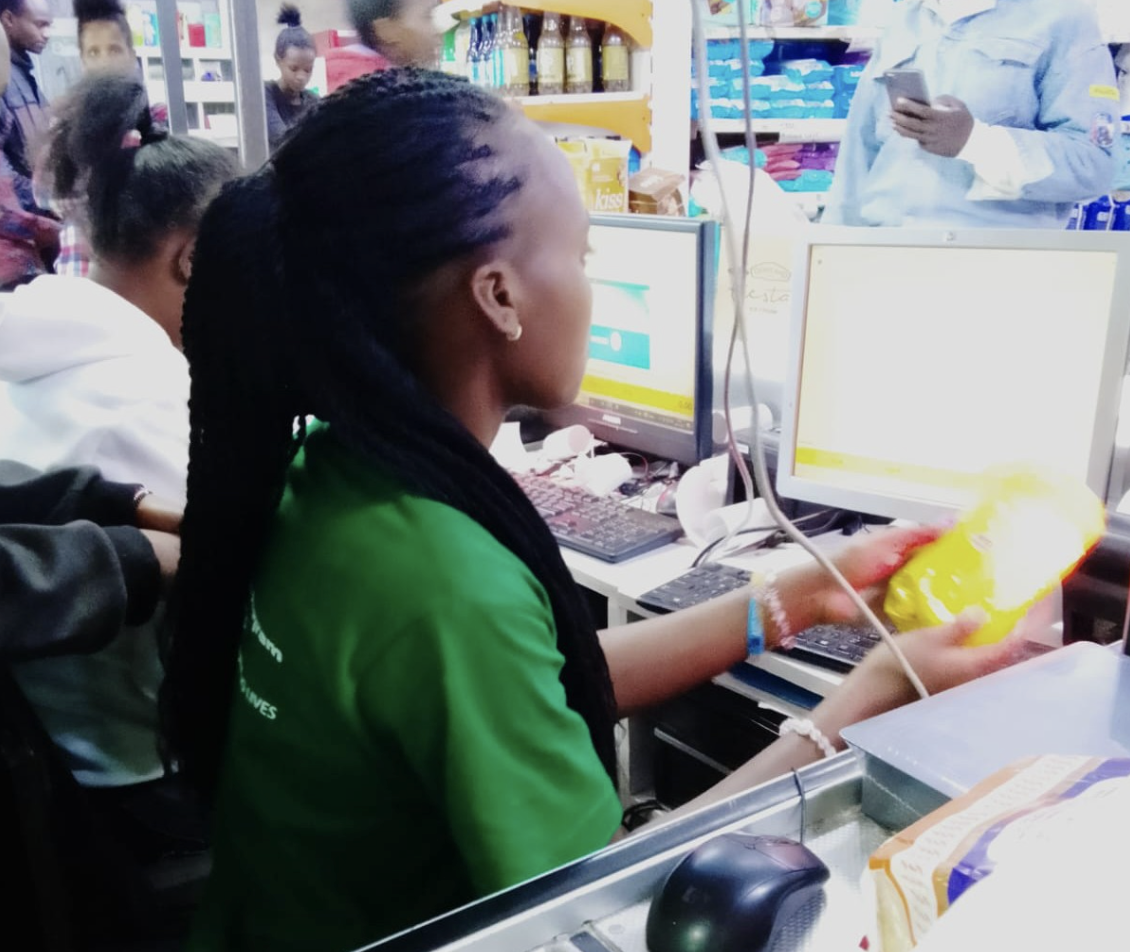
By implementing principles such as a customer credit system and strategic price adjustments, Nasra was able to apply the skills she learned in DEEP to stand up a corner store selling clothes and other retail items. This filled a need within the community and allowed her to start paying her own rent, and has inspired her to pass on her lessons learned to others.
 Nancy’s Contagious Attitude
When times were challenging, Nancy fought hard to stay committed to school, which helped her prove herself with technical competence at her first job. She sees DEEP as pivotal in her life journey which she approaches with enthusiasm and confidence.
One thing we observe in every young learner, is the give to gain phenomenon. When we invest in the security and education of a young girl, she will inevitably seek to help those within her sphere of influence.
How You Can Engage
Millions will discuss the events that brought us this day, hopefully in greater detail than a single article will allow. Some cultures honor International Women’s Day through celebrations and gifts, similar to Mother’s Day. Others offer special recognition for women in the workplace, similar to Labor Day. We suggest finding a thoughtful way to say happy International Women’s Day to the women in your workplace, your family, and elsewhere in your life.
We applaud those who find new inspiration to help push the wheel of progress. We at Asante Africa Foundation want to offer opportunities to continue the results day to day, month to month, year to year, until gender equity and equality is ubiquitous across all continents. In this context, our strength is in youth education and resources at local levels in East Africa. With countless situations and places deserving attention, we believe every nudge helps!
If you are motivated to participate, consider following the links below.
Written by Rich Kern