
Understanding and Overcoming the Causes of Lack of Female Education in Africa
 When the rooster crows at the break of dawn, the young girl ties her wrapper around her chest and picks up a broom from behind the door. She heads for the compound and starts the day. Ten minutes later, she goes back to the room to return the broom, and picks a basin to fill the empty barrel sitting outside their door with water. Her little brother stretches on the mat and pulls his cover cloth that has entangled his feet all the way up to cover his chest; he starts snoring. After her fourth trip from the water pump, she finds her mother cooking and her brother ready for school. “Mama, when am I starting school?” she inquired for the umpteenth time. “Soon, my daughter; when Papa’s proceeds from the farm are enough to send you both to school,” Mama says impassively.
This is the story in many African homes. Even though education is one of the fundamental human rights that is necessary for personal and societal development, female education in Africa still faces significant challenges. Girls in Africa have long been confined to the narrow rooms of limitation, with their potentials locked behind the doors of discrimination, inequality, and stereotypes disguised as cultural and societal norms. Poverty poses as one of the major causes of lack of female education in Africa. More often than not, families prioritize educating their sons over their daughters, especially when the family is financially constrained.
These challenges are a menace to female education in Africa and have sparked a moral outrage due to the crippling constraint on the potential of affected communities. Dreams have been killed and blazing fires of the desire to be educated quenched, however, there are the ones who refuse to let the embers of female education die. Asante Africa remains one of the silver linings, working tirelessly to fan the flames of female education and opportunity for girls across East Africa.
Over the years, Asante Africa has made positive strides in breaking the barrier of lack of female education in Africa by introducing female empowerment programmes and providing scholarships and financial support to girls from low-income families.
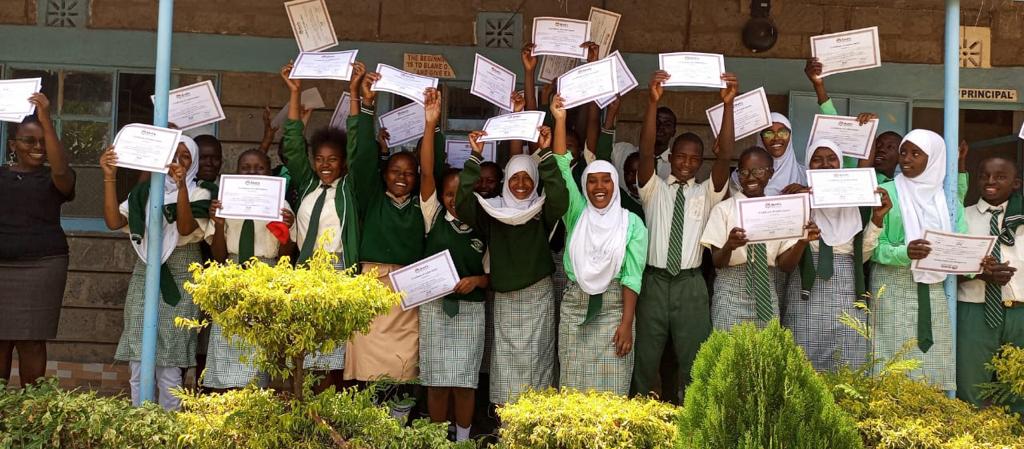
How often do you see girls dominating a school group photo? Rarely! This photo is evidence of what Asante Africa is doing to boost female education in Africa
Have you read about Sharon’s journey to becoming a nurse despite her humble beginnings? How about Rebecca, who is on her way to realizing her dream of becoming a lawyer, even though her family is incapable of funding her education. There are many more like Rebecca and Sharon who have benefited from Asante Africa’s need-based scholarship schemes that provide low-income families from rural East Africa, especially females, with financial aid and quality education.
We understand that the lack of female education extends beyond financial incapability; societal norms and stereotypes also play a major role. On this account, Asante Africa has put together a program to engage parents and encourage them to take active roles in their daughters’ education and successful growth.
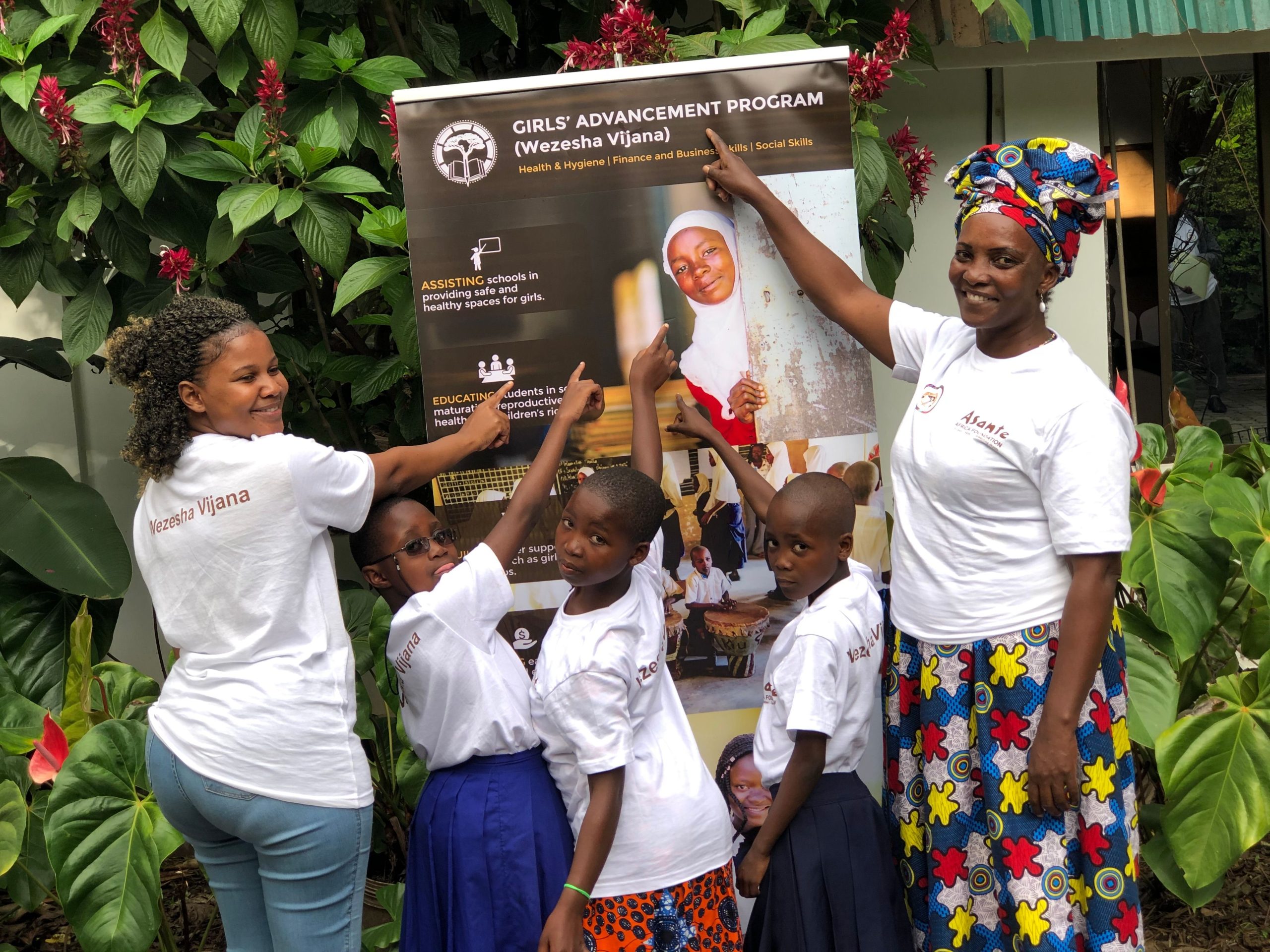 While working on their parents, Asante Africa is also empowering the girls through various ways. This includes the Wezesha Vijana Program, which focuses on empowering the girls through community involvement and education. There is also the Youth Livelihood Program, which supports the intellectual, social, health and professional development of young women. These programs come in the form of mentorship, leadership development, and life skills training, with the sole aim of opening up new possibilities for women and girls in Africa.
Through these programs, Asante Africa has increased girls’ access to quality education, improved their academic performance, and empowered them to become confident, independent leaders in their communities.
The lack of female education in Africa is a problem with socio-cultural underpinnings. However, we are working to break this barrier that hinders girl-child education through scholarships and female empowerment programs. By these actions, Asante Africa is providing access to education, addressing gender inequality, challenging unproductive societal norms, and ensuring a culture of empowerment and leadership.
WRITTEN BY: Halisatu Aziz