

Wezesha Vijana Program (WVP)
•••
(Wezesha Vijana is Swahili for Empowering Ourselves)
Wezesha Vijana Program is a unique, multi-faceted life skills program. Wezesha Vijana’s approach to personal, social, economic, and health skills development is based on a human (woman) centered design. This rights-based program emphasizes the active participation of adolescent girls and young women in defining their own needs and leading solutions to the issues that affect their lives.

CHALLENGES GIRLS FACE IN EAST AFRICA
Understanding relevant cultural, social, and health factors are critical to addressing girls’ education and the “keeping girls in school” gap. Girls struggle to develop essential life skills due to the systemic issues of gender-based violence, early marriage, lack of education and limited opportunity that deeply affect rural communities.
16.7 MILLION GIRLS
are out of school in sub-Saharan Africa (UNESCO)
37% OF YOUNG WOMEN
(20-24) were married before the age of 18 (sub-Saharan Africa – UNWomen)
MORE THAN HALF
56% of urban girls and women live in slum conditions (sub-Saharan Africa – UNWomen)
WHAT IS THE WEZESHA VIJANA PROGRAM?
Through “safe spaces” and learning about money and power dynamics, girls support each other and educate their peers using activities that they have developed. By treating girls as active participants rather than passive beneficiaries, Wezesha Vijana Program empowers young women to take control of their futures and make a positive impact in their communities.
WHO IS THE
PROGRAM FOR?
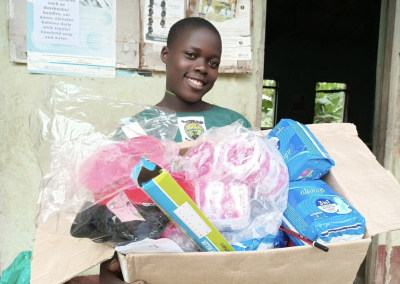
Girls Showing Their New Learning and Hygiene Products
WVP focuses on the upper-primary level adolescents (ages 11-14) when girls are more at-risk for dropping out.
WVP includes boys as peer-allies (33% of students) who learn about the challenges girls face and how to best support them as they overcome these challenges.
PROGRAM
TOPICS
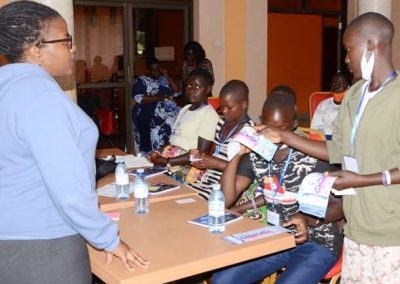
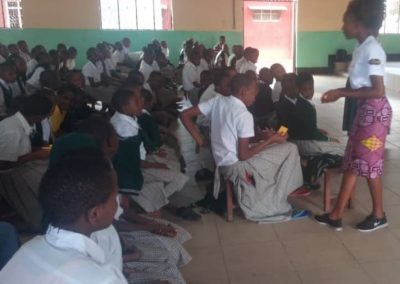
Students at a Girls Empowerment and Rights Summit
Through 16 sessions, studenst gain personal, human, and social assets.
PERSONAL ASSETS: Dream mapping, goal setting, and confidence building.
HUMAN ASSETS: Puberty, hygiene, children’s rights, gender-based violence, teen pregnancy, and HIV awareness.
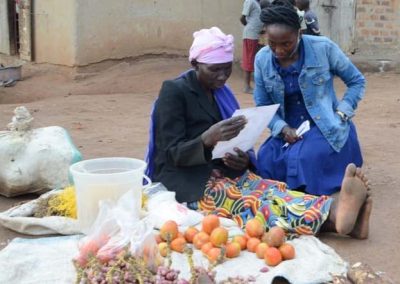
SOCIAL ASSETS: Networking, financial literacy, seeking help, and finding support.
WHAT MAKES THE
PROGRAM UNIQUE?
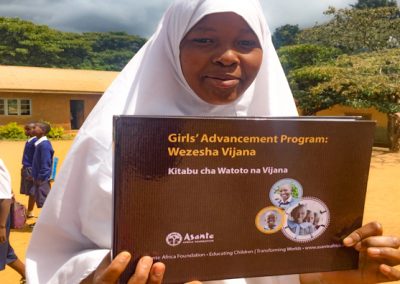
Students Holding a Program Workbook
Wezesha Vijana Program empowers youth to take control of their futures and make a positive impact in their communities using the tools they have around them.
The program includes community support, parental engagement, peer mentoring, and active engagement of boys.

EVIDENCE-BASED RESULTS
93%
Of students understand how to take care of their bodies (2024)
88%
Of students have initiated savings accounts (2024)
84%
Of students reported accurate knowledge of HIV & STIs (2024)
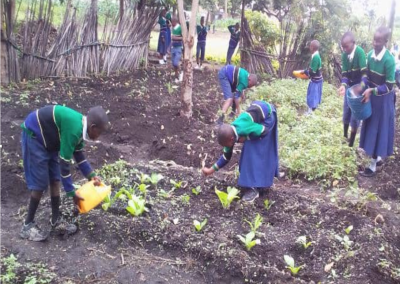
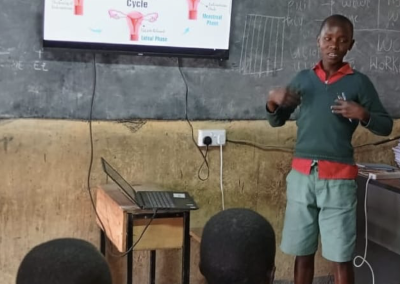
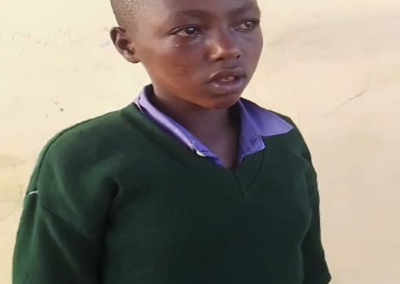
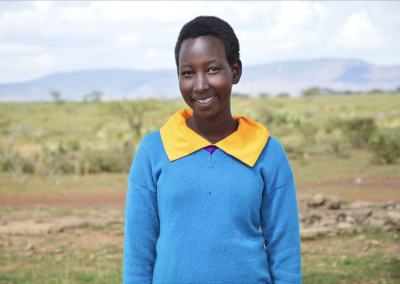
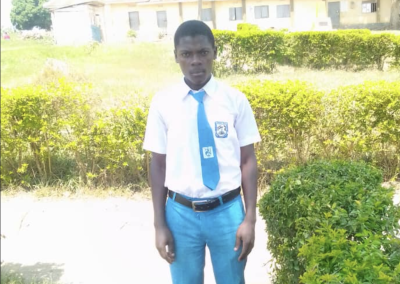
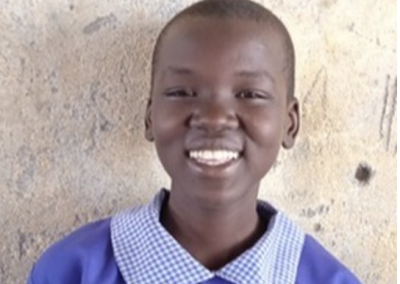
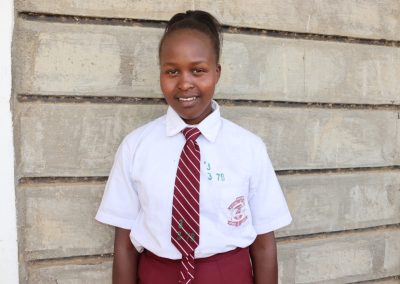
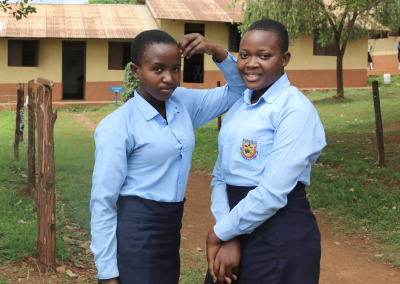
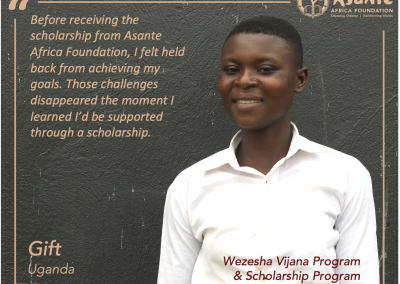
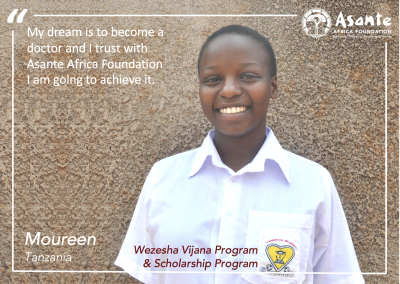
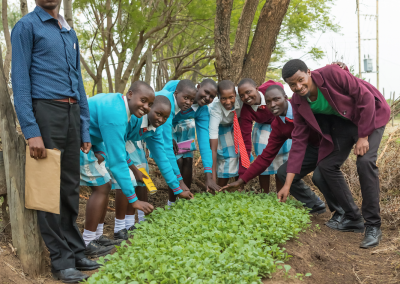
STUDENTS ARE BREAKING DOWN BARRIERS













Frequently Asked Questions
1. What does “Wezesha Vijana” mean?
“Wezesha Vijana” is Swahili for “Empowering Ourselves,” reflecting the program’s focus on giving adolescent girls and young women the tools to define their own needs and lead solutions in their communities.
2. Who is the Wezesha Vijana Program for?
The program primarily targets adolescent girls in upper-primary school (ages 11–14), when girls are most at risk of dropping out. It also includes boys (about 33%) as peer allies to build understanding and support.
3. What topics are covered in the program?
Over 16 structured sessions, participants learn:
- Personal assets (e.g., dream mapping, goal-setting, confidence)
- Human assets (e.g., puberty, hygiene, children’s rights, gender-based violence, HIV awareness)
4. How is Wezesha Vijana different from other youth programs?
- It’s rights-based and human-centered, meaning young women help define what they need and co-create solutions.
- It fosters safe spaces for honest dialogue and peer mentoring.
- There is parental and community engagement, plus peer mentoring and involvement of boys, not just girls.